Role: Founder & Lead Product Architect (End-to-End Execution)
Timeline: Jan 2026 – Present (Active Development)
Scope: Product Strategy, Data Architecture, UX/UI, Frontend Engineering
Key Domains: Multi-tenancy, Regulatory Compliance, AI-Orchestrated Logic
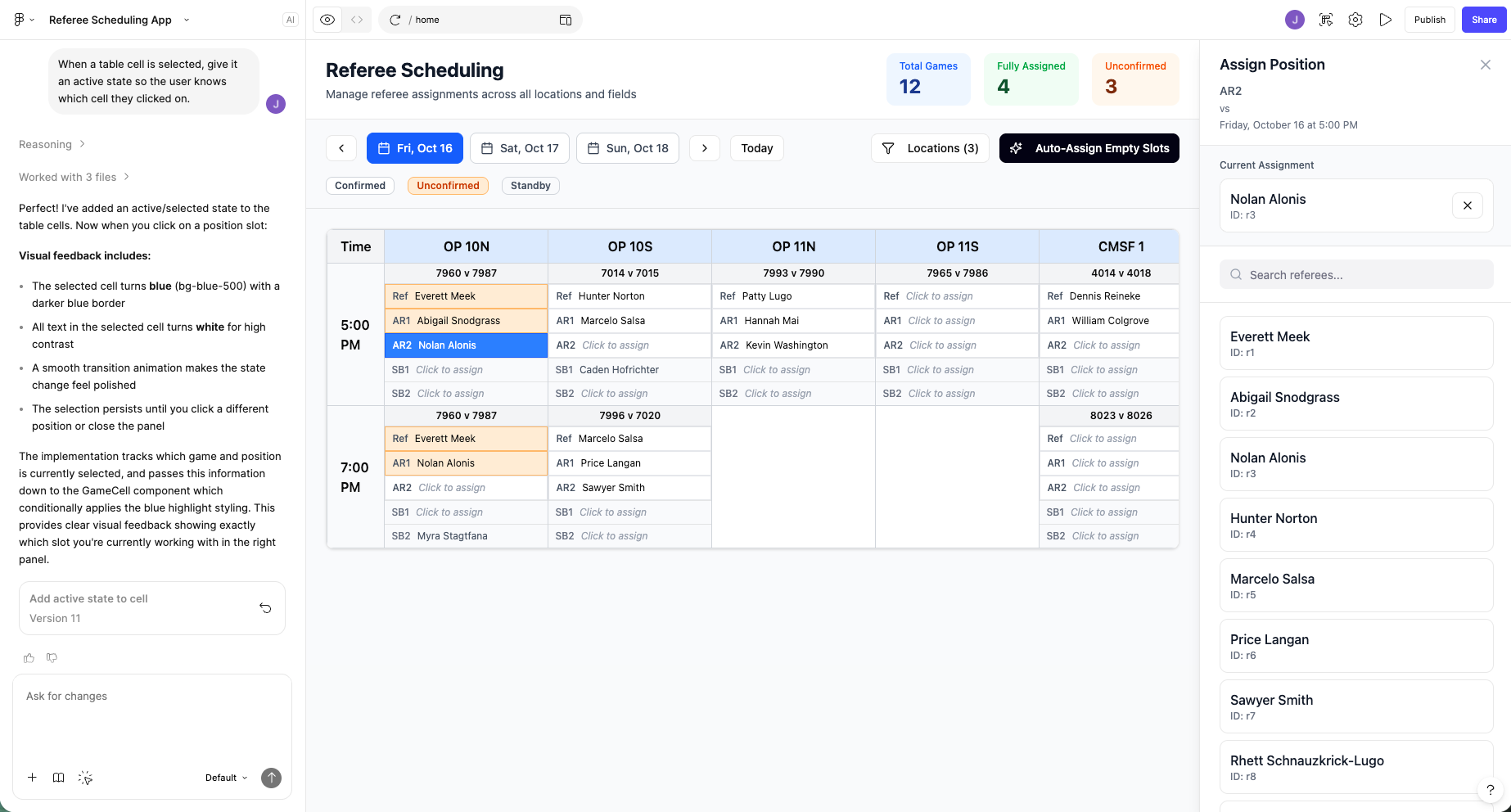
Figma Make Rapid Prototyping
The Business Challenge:
The Liability of "Manual" Compliance
In youth sports logistics, scheduling is a secondary problem; compliance is the primary bottleneck. Legacy systems rely on human assignors to manually verify background checks, age requirements, and varying certification levels across hundreds of referees.
• The Risk: A single manual error—scheduling an uncertified or unvetted official—creates massive legal and financial liability for the organization.
• The Scalability Ceiling: Organizations cannot grow because the "compliance tax" (manually verifying documents for every game) consumes all operational bandwidth.
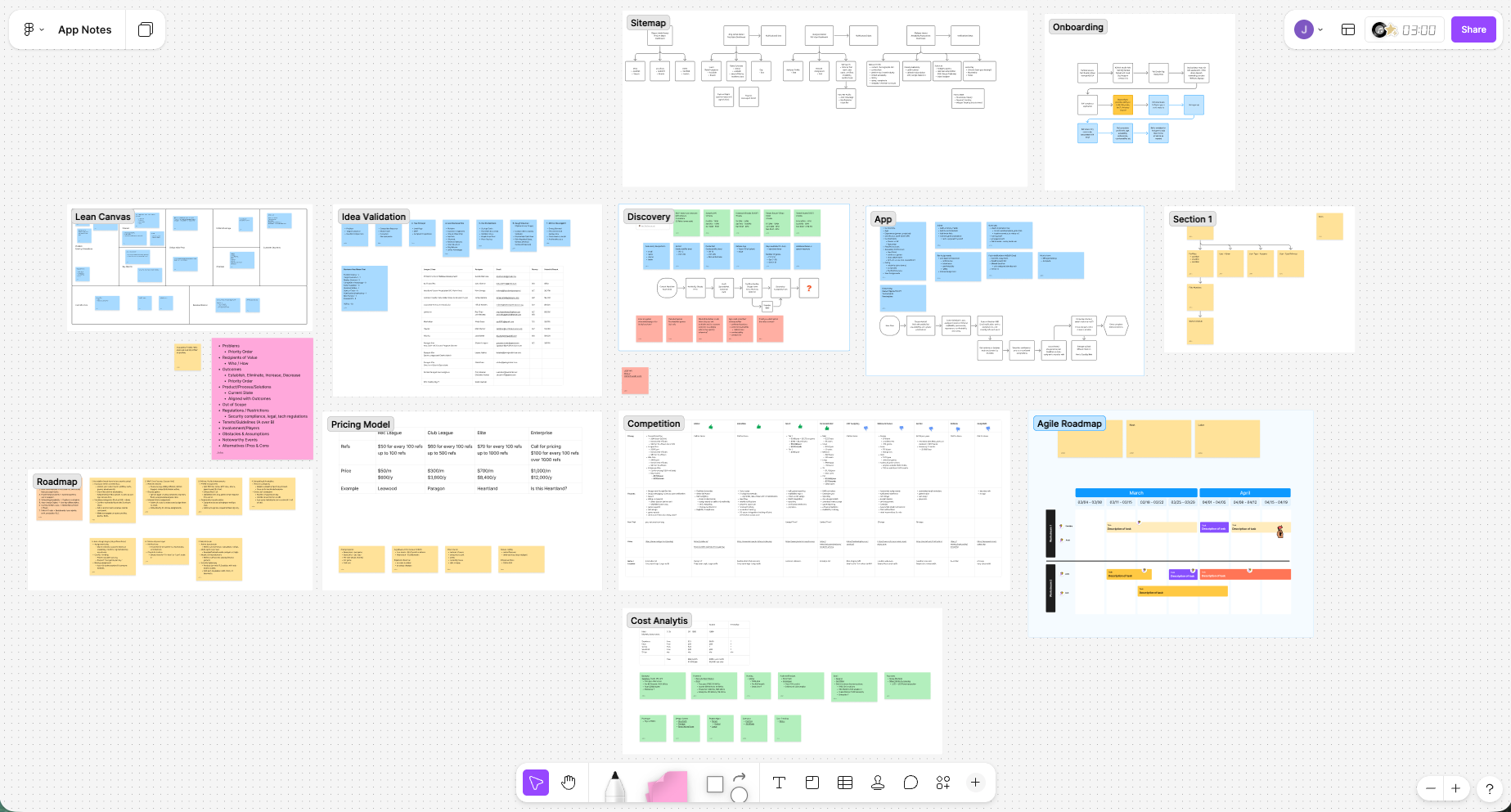
FigJam Documentation
The Solution: A Compliance-First Logic Engine
I moved beyond "interface design" to build a system where the scheduling workflow is physically incapable of violating compliance rules.
• Hard-Coded Guardrails: I architected the data schema to treat certifications as "hard gates." If a referee's background check is expired, the AI-assisted engine automatically excludes them from the assignment pool before a human even sees the list.
Decision Artifact: "Soft" vs. "Hard" Constraints:
• The Choice: I chose to implement a "Hard Gate" logic for safety compliance but a "Soft Warning" logic for geographic preferences.
• The Trade-off: "Hard Gates" increase friction but eliminate liability. "Soft Warnings" maintain user flexibility.
• The Leadership Signal: This represents a cross-functional negotiation between legal safety (Compliance) and user experience (Efficiency).
Ownership & Technical Leadership
• I architected the Row-Level Security (RLS) in Supabase to ensure that sensitive compliance data (SSNs, background checks) is strictly isolated between tenants, meeting enterprise security standards.
• I engineered an automated "Certification Watchdog" using AI-orchestrated logic that flags upcoming expirations 30 days out, shifting the workflow from reactive to proactive.
• I designed the dashboard to surface "Risk Signals" rather than just "Empty Slots," allowing admins to see exactly why a game is unassigned (e.g., "0 available referees meet the Level 3 certification requirement").
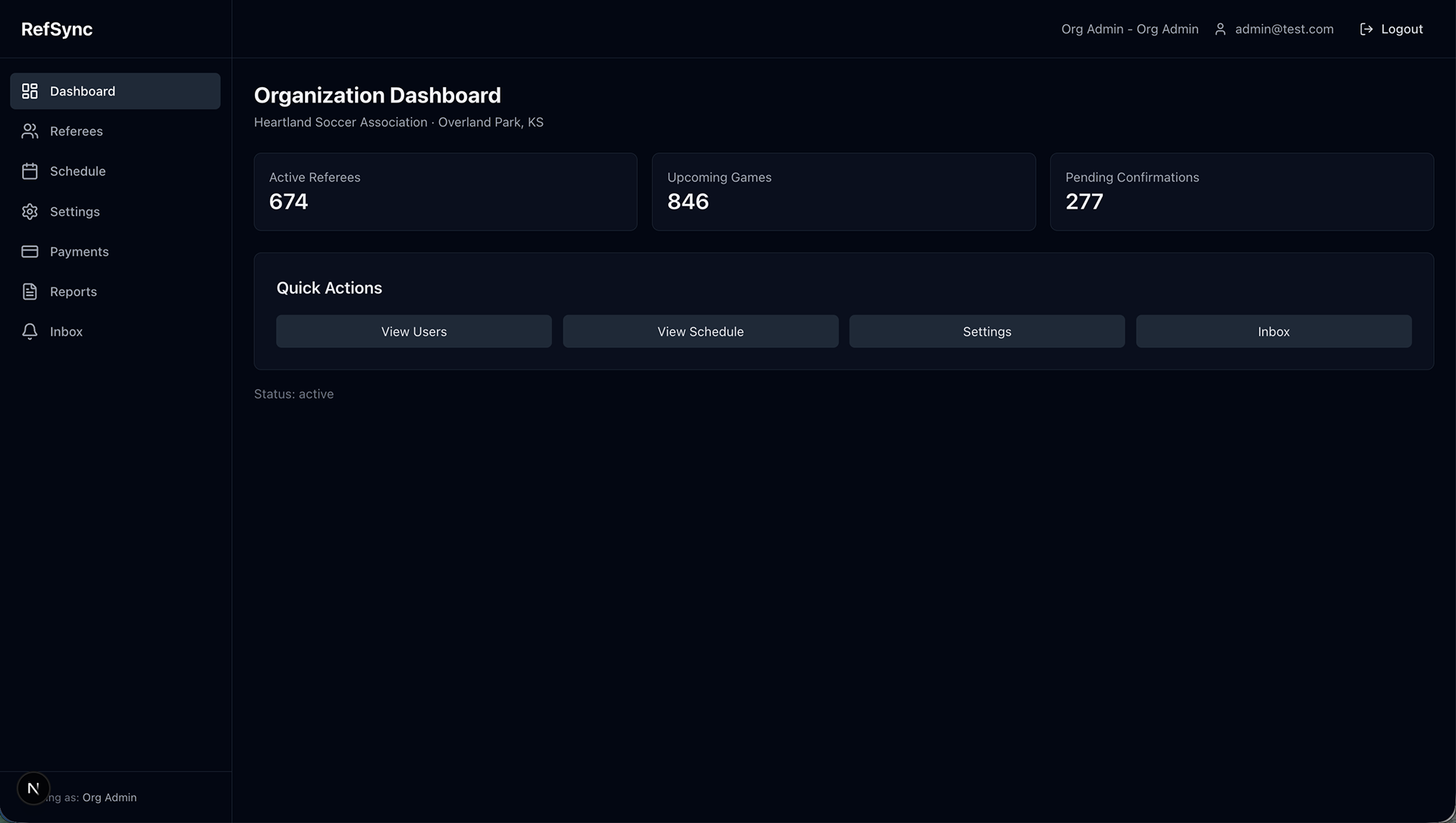
Strategic Outcomes & Value
• Liability Reduction: By automating the verification gate, the system reduces the risk of non-compliant assignments to 0%.
• Operational Velocity: The "Intelligence Layer" resolves complex multi-variable assignments (Distance + Certification + Availability) in seconds, a task that previously required 20+ minutes of manual cross-referencing per game.
• Proven Scalability: Successfully stress-tested the multi-tenant architecture to handle 500+ game slots while maintaining sub-second response times for compliance checks.
Let’s Connect
I specialize in untangling complex enterprise workflows and bridging the gap to engineering. If you’re looking for a Product Architect to lead your next zero-to-one initiative, let’s connect.