Role: Lead Product Designer (Consultative)
Team: 2 Solutions Architects (Juniper Logic), 2 Developers
Timeline: March 2026 – Present (Active Development)
Platform: nopCommerce
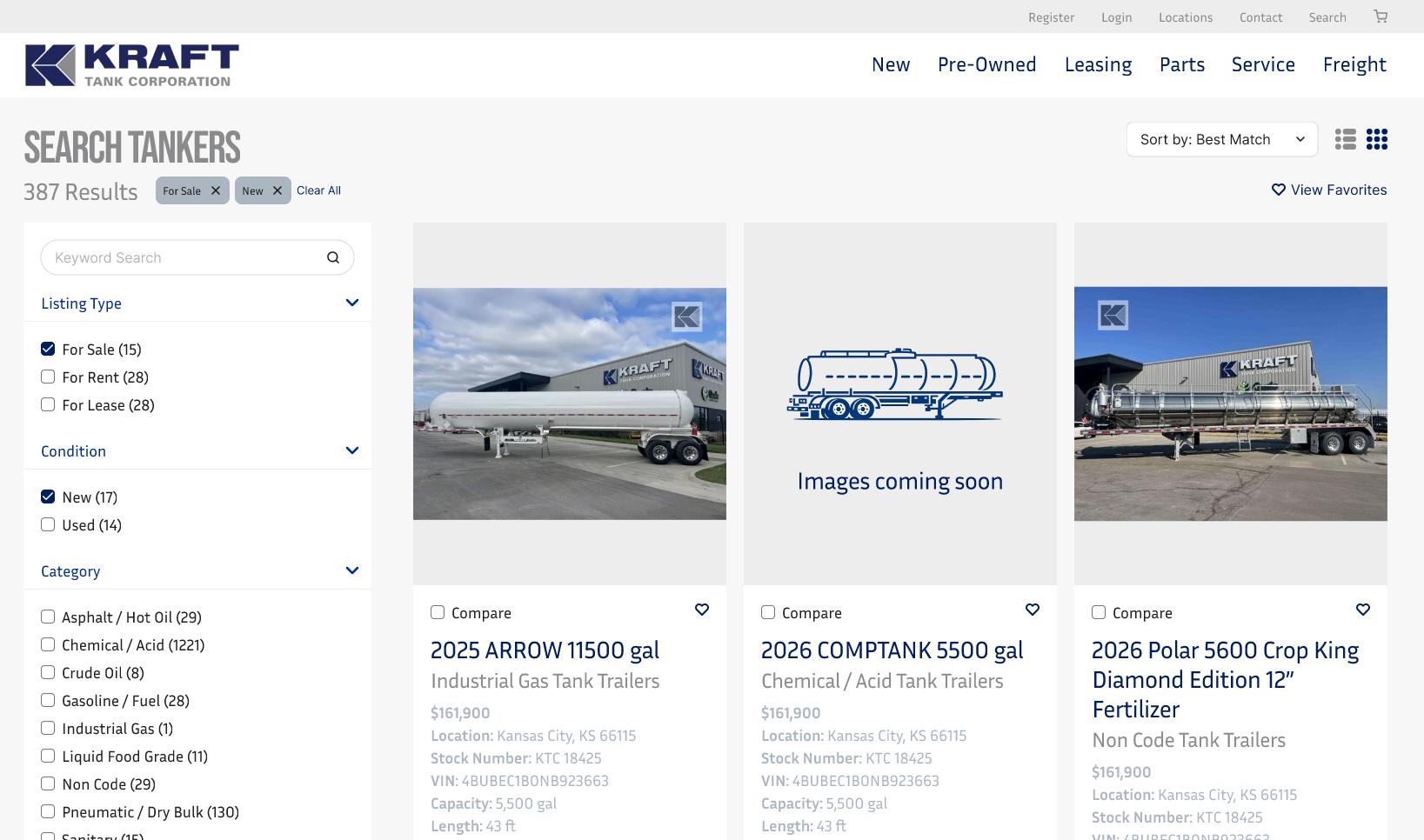
The Business Challenge: Solving "Navigational Whiplash"
Kraft Tank’s existing digital presence was split across two separate domains—one for equipment sales and one for parts.
• The Experience Gap: Moving between sites caused abrupt changes in navigation and branding, creating a disconnected journey that eroded user trust.
• The Tactical Fail: Inherited a legacy redesign attempt from a previous agency that failed to reconcile these environments, essentially 'polishing' the existing fragmentation rather than fixing the underlying architecture.
• The Goal: Architect a single, cohesive "North Star" experience that allows a user to research a quarter-million-dollar tanker and purchase a $50 valve in the same session.
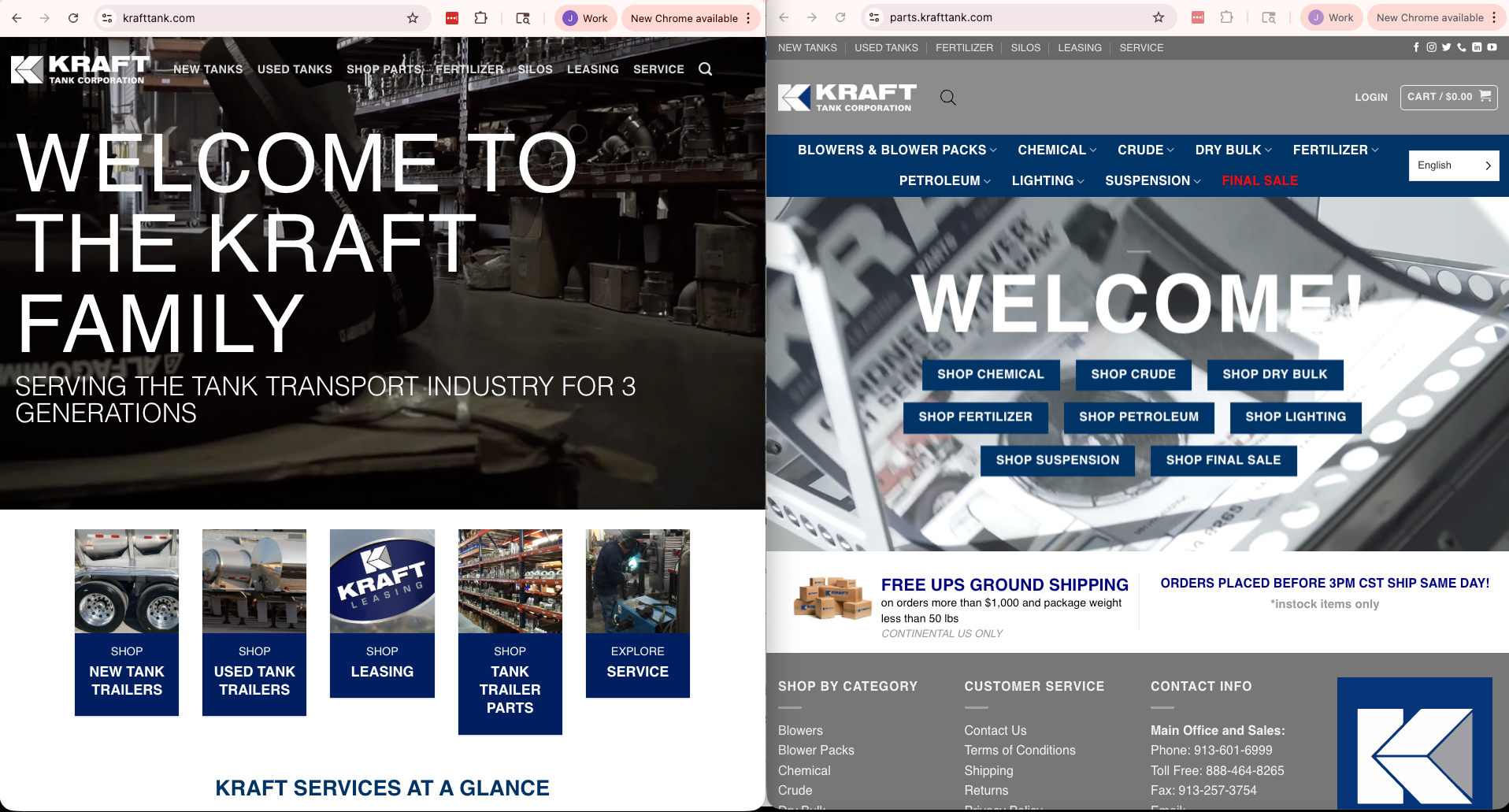
OLD Home Pages
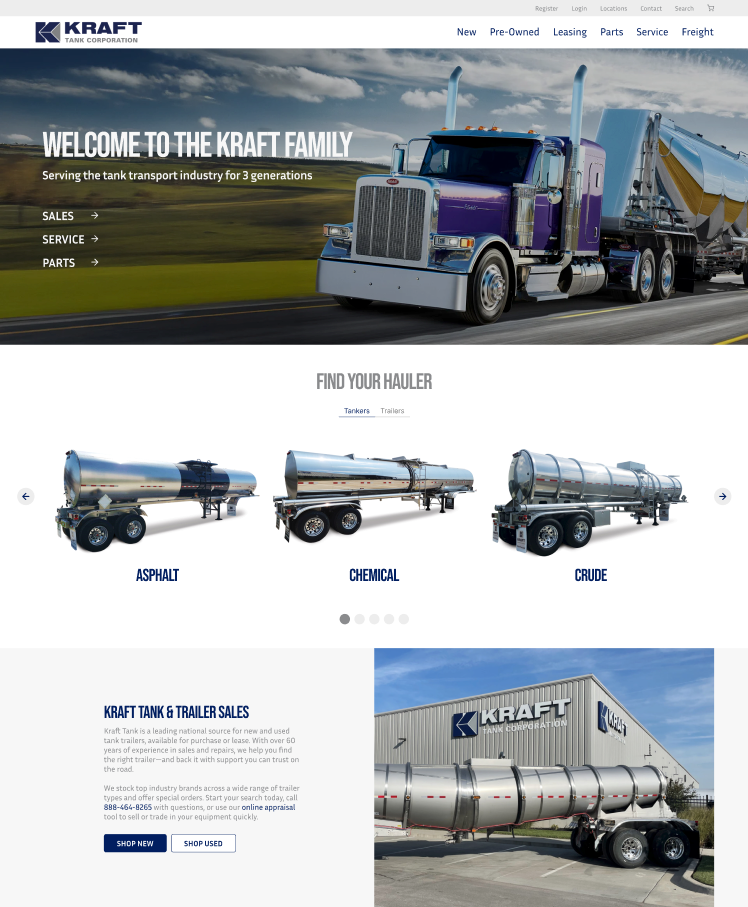
New Home Page
The Strategic Pivot: The "Redesign of a Redesign"
This project was a "rescue mission." I led the effort to move the project from a static Adobe XD prototype into a production-aligned Figma system.
The Choice: I chose to discard the previous fragmented UI in favor of a Component-Driven Architecture using Auto Layout and a centralized library.
The Decision Artifact: I compared the original site’s "unstructured" search with my new Dual-State Search Logic.
Tanker Search: Optimized for specifications and lead conversion (Credit Apps/Leasing).
Parts Search: Optimized for SKU discovery and immediate checkout.
The Result: This architectural shift ensured the client could manage two distinct business units through a single, unified admin portal (nopCommerce) without confusing the end user.
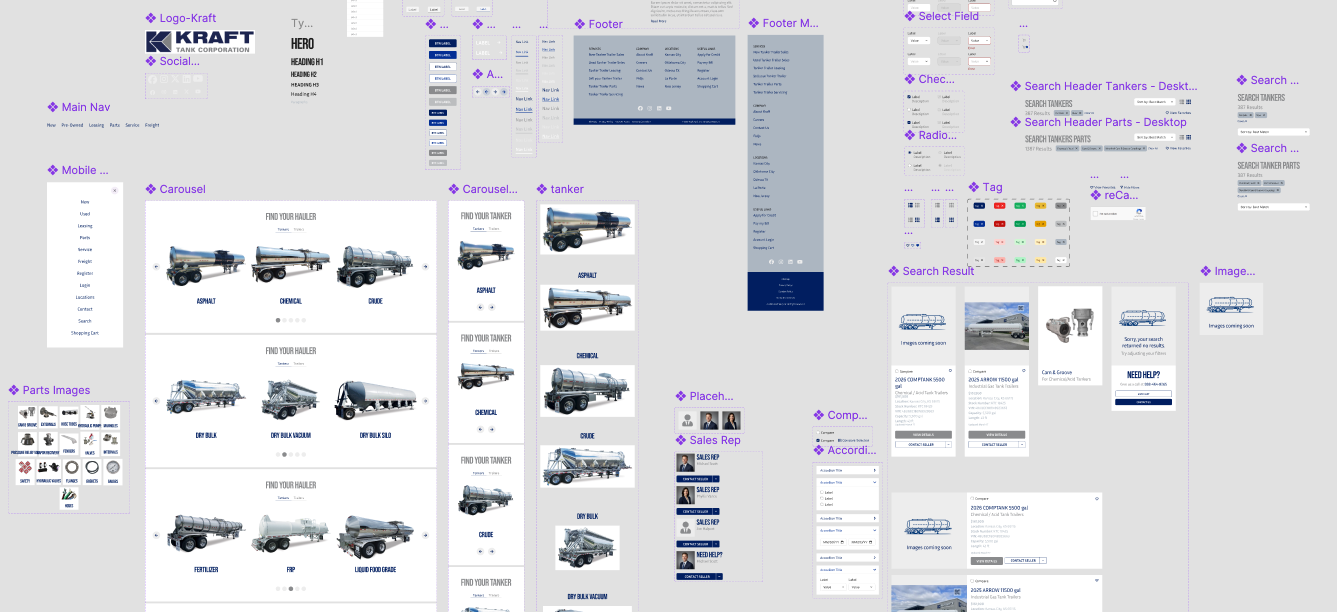
Figma Components
Architecting the Discovery Engine
Transitioning from a legacy "Category Drill" to a high-velocity Dynamic Filtering system.
• The Legacy Friction: The original Parts site relied on a deep, hierarchical taxonomy. Users were forced to navigate through 4–5 layers of category landing pages before finding a specific part, creating a high "Click Tax" and significant discovery friction.
• The Mandate: As part of the nopCommerce migration, the team moved to an SRP-first discovery model. My challenge was to architect the filtering logic that would replace those legacy category layers.
• The Choice: I chose to implement a Context-Aware Filter Pane that surfaces specific attributes only when relevant to the user’s current search intent (e.g., "Tanker Capacity" filters for trailers vs. "Material Type" for replacement valves).
• The Result: A streamlined "Time-to-Part" journey that reduced a 5-minute discovery process into a sub-30-second search.
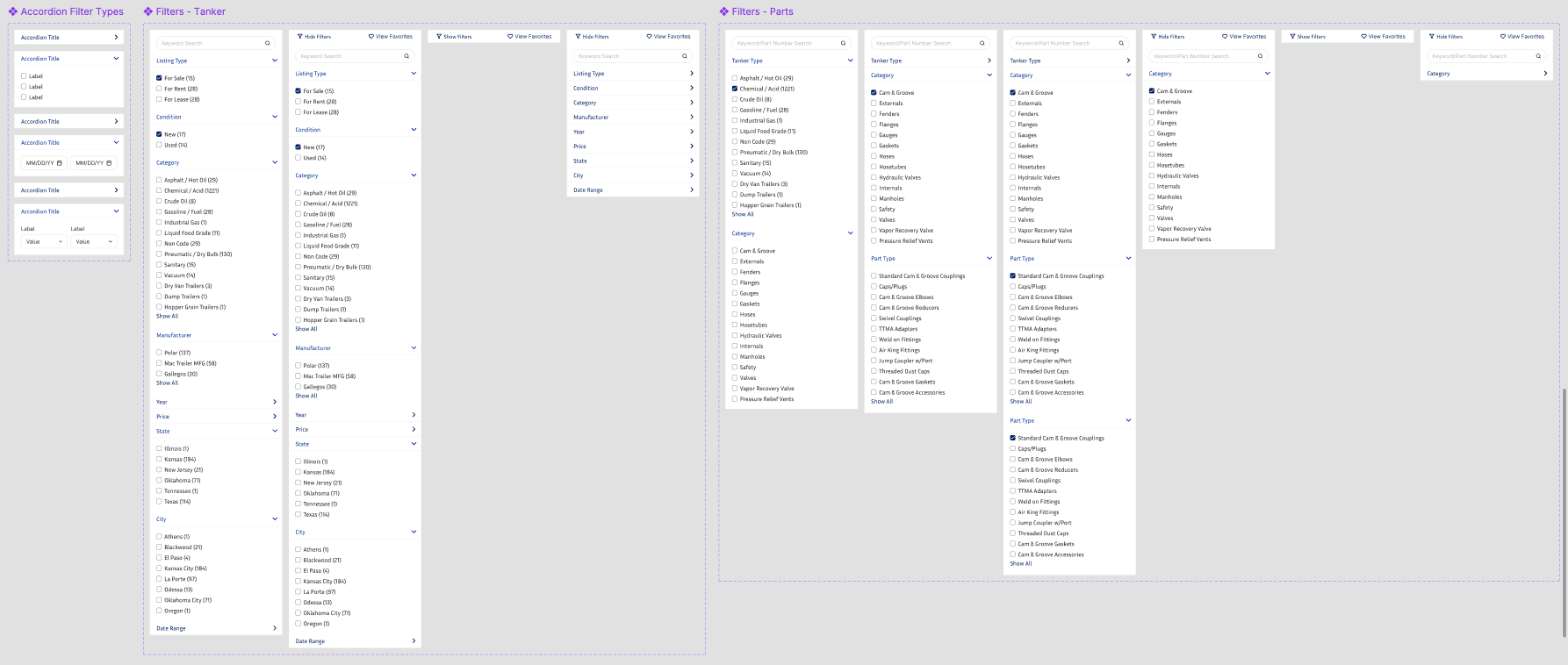
SRP Filter components
Ownership & Stakeholder Influence
• I facilitated multiple design reviews directly with the client (Kraft Tank), translating their complex operational needs into technical requirements for the Juniper Logic team.
• I architected the 5-step digital credit application, transforming a complex, high-friction paper process into a structured, user-friendly flow that maintains compliance and data integrity.
• I engineered the handoff process for the dev team, building a 1:1 component library that matched the technical constraints of the nopCommerce platform, reducing "interpretation gaps" during build-out.
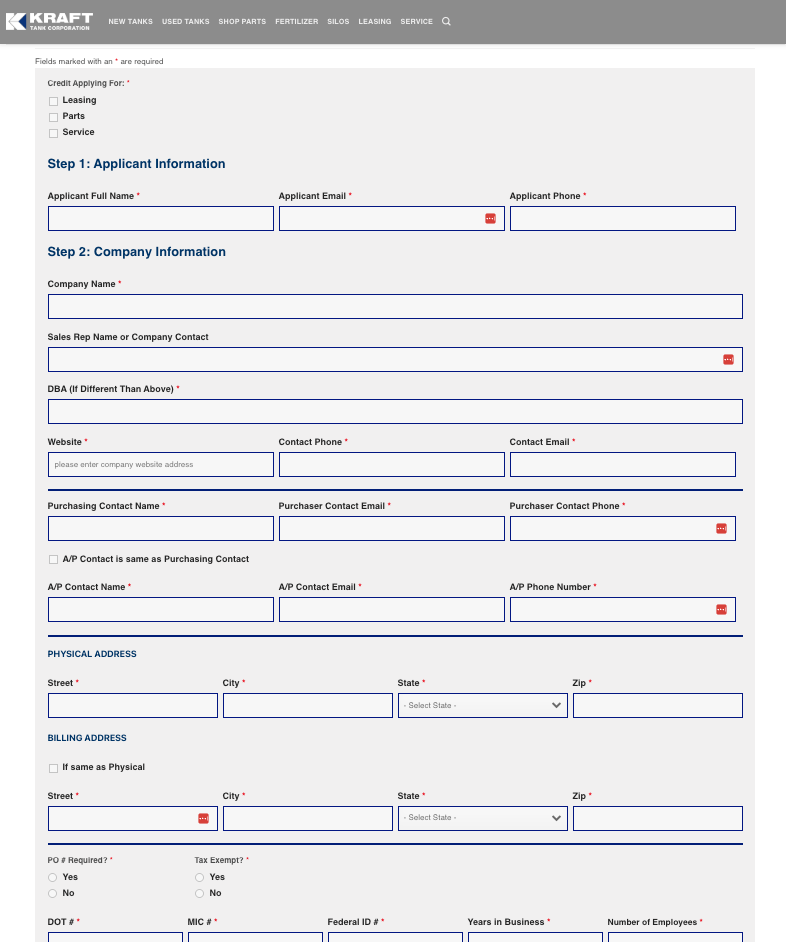
OLD Credit Application
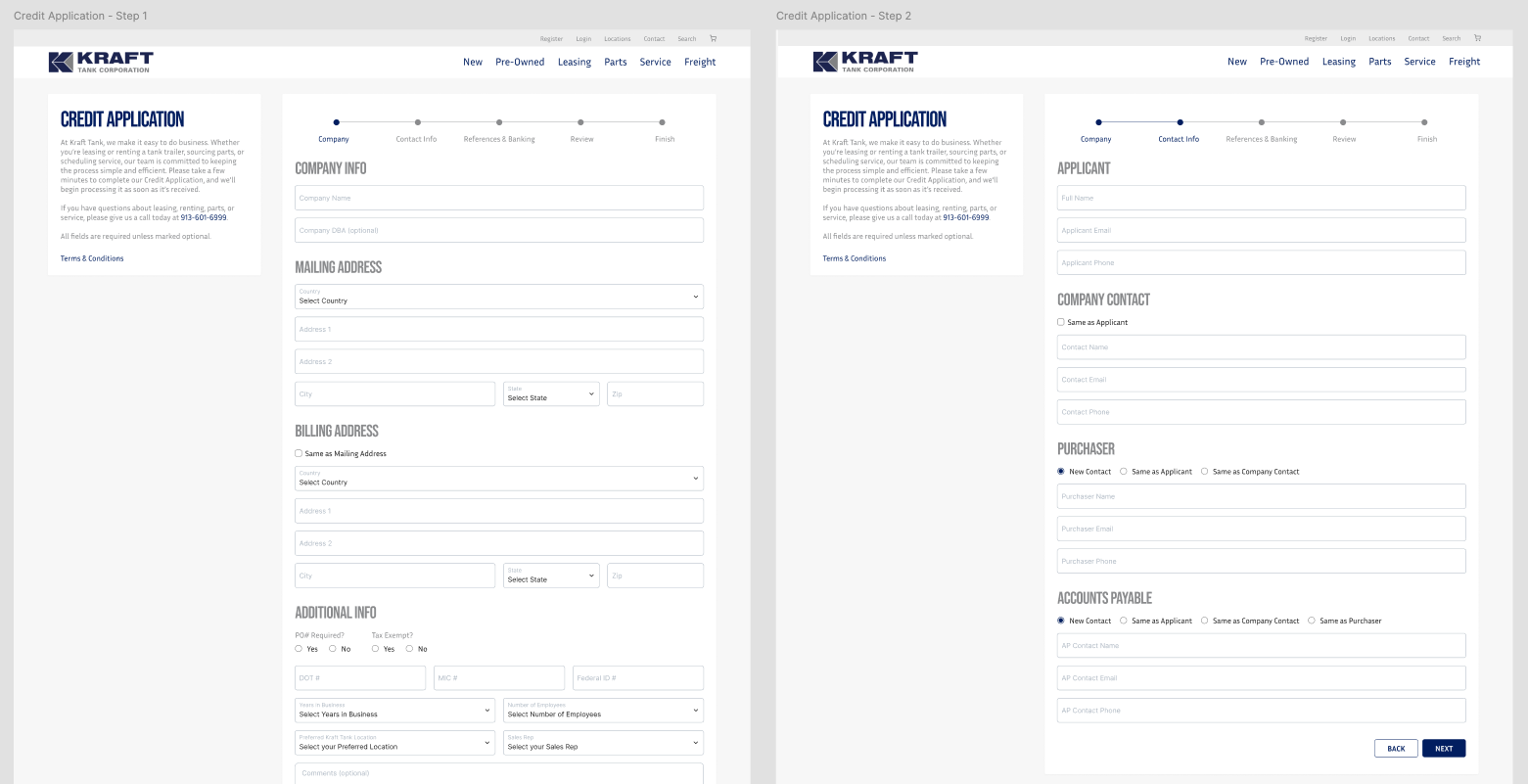
New Credit Application
The Solution: Systems-Level Execution
• Dynamic SRP Logic: I designed a Search Results Page (SRP) that swaps filter logic and card templates based on the user's "space" (Tankers vs. Parts), ensuring relevant data—like leasing options vs. "In-stock" status—is always prioritized.
• Lead-to-Lease Engine: Designed the "Credit Application" as a progressive disclosure flow, reducing the cognitive load of a 5-step form while capturing banking, references, and authorizations.
• Transactional Rigor: Built a complete checkout flow supporting ACH, Purchase Orders, and saved locations—critical features for enterprise B2B customers.
Strategic Outcomes & Technical Integrity
• Operational Clarity: Delivered a high-fidelity "North Star" that unified Kraft Tank's sales, parts, and service departments under one brand language.
• Eliminated Design Debt: By moving the project to Figma with robust auto-layout and error states, I provided a "future-proof" system that can scale as Kraft Tank adds new equipment categories.
• Validated Usability: My suggestions during client reviews led to the "Appraisal Request" and "Interactive Map" features, providing new lead-gen funnels that didn't exist in the previous design attempt.
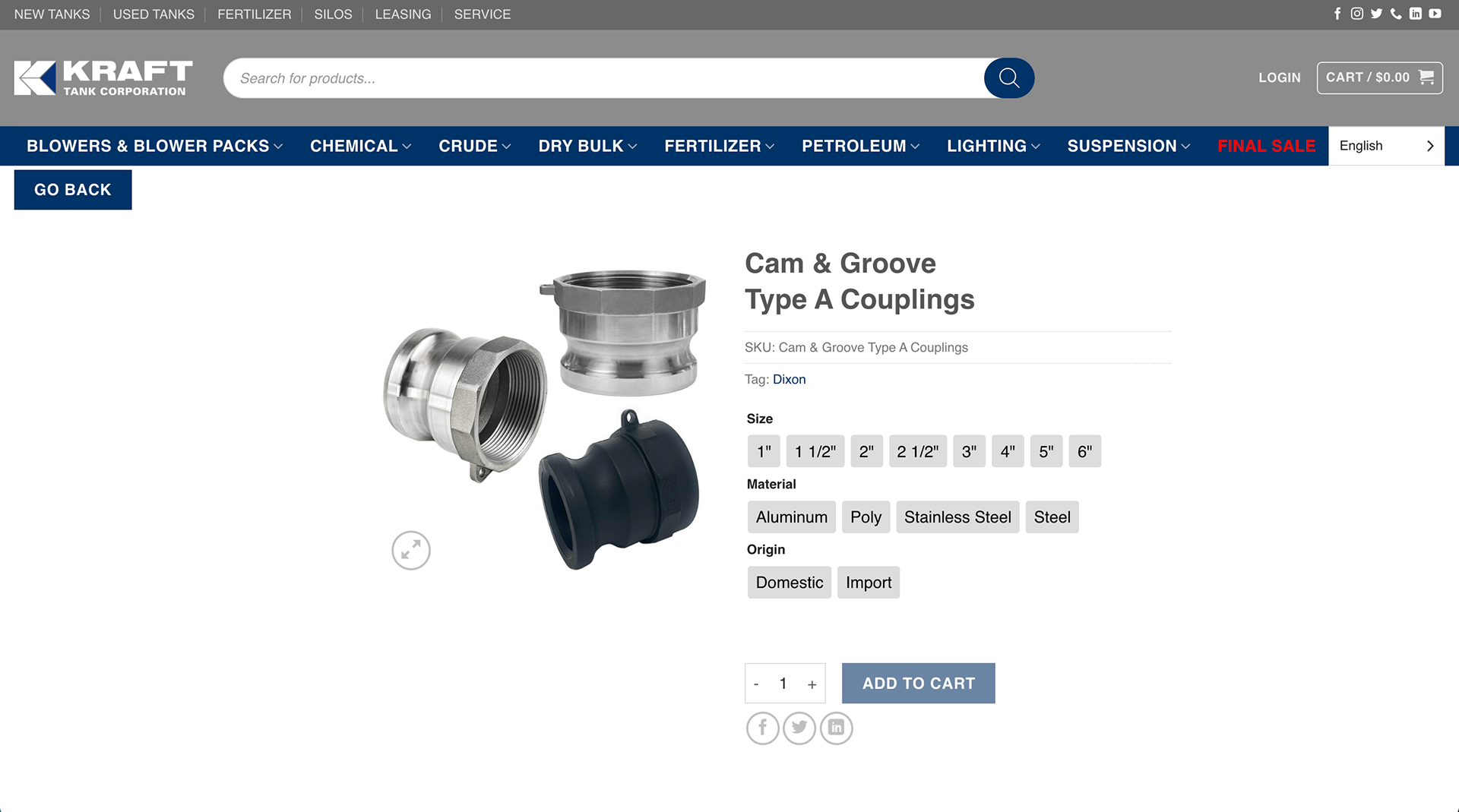
OLD Product Details
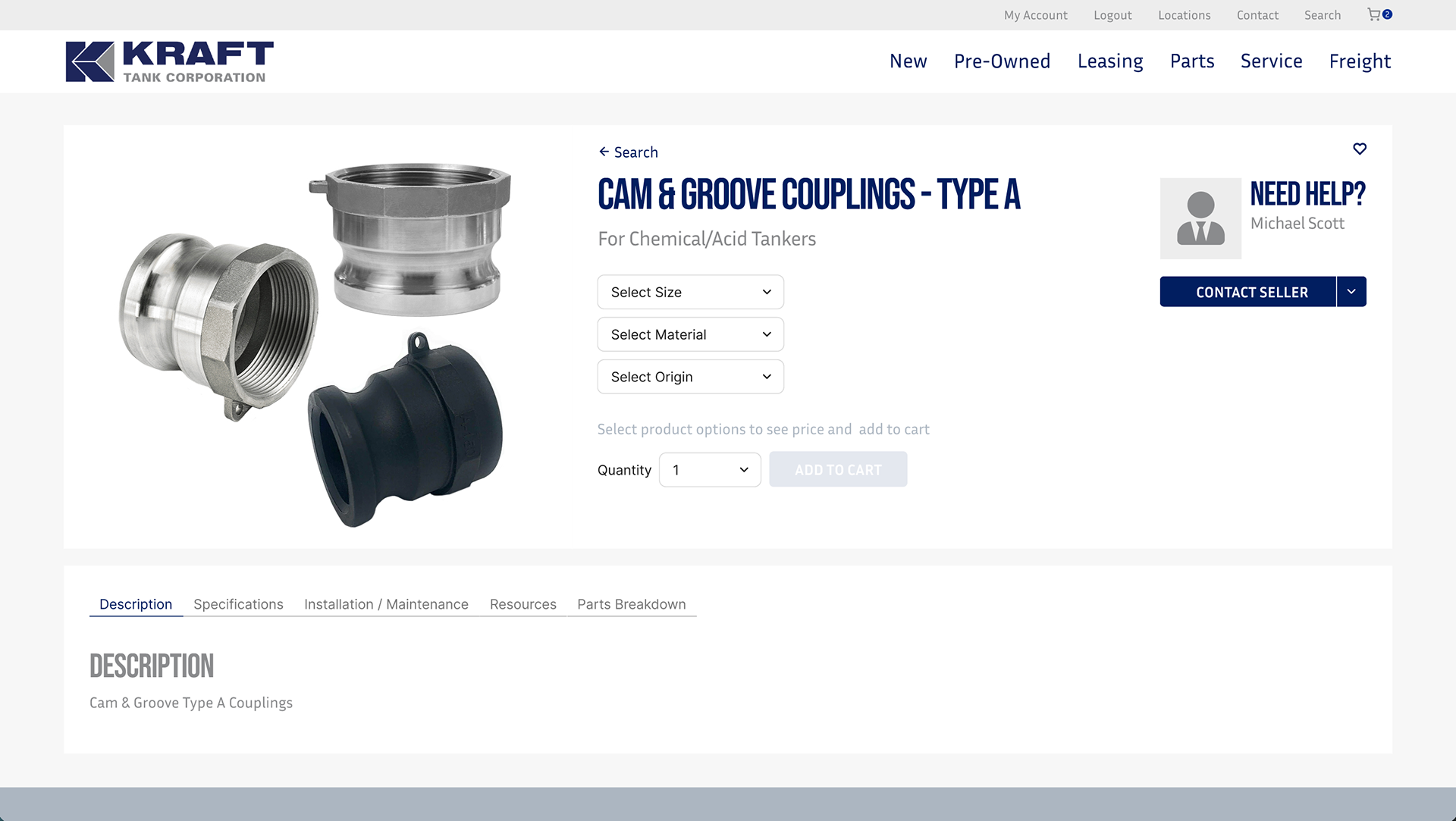
New Product Details
Let’s Connect
I specialize in untangling complex enterprise workflows and bridging the gap to engineering. If you’re looking for a Product Architect to lead your next zero-to-one initiative, let’s connect.